What I know now, six years and three sessions a week later
I'm not fast. I'm not particularly elegant. I am almost certainly the only person in the history of the Chesterfield Canal to have used it as an evasion tactic and subsequently taken up running as a hobby. But here we are.
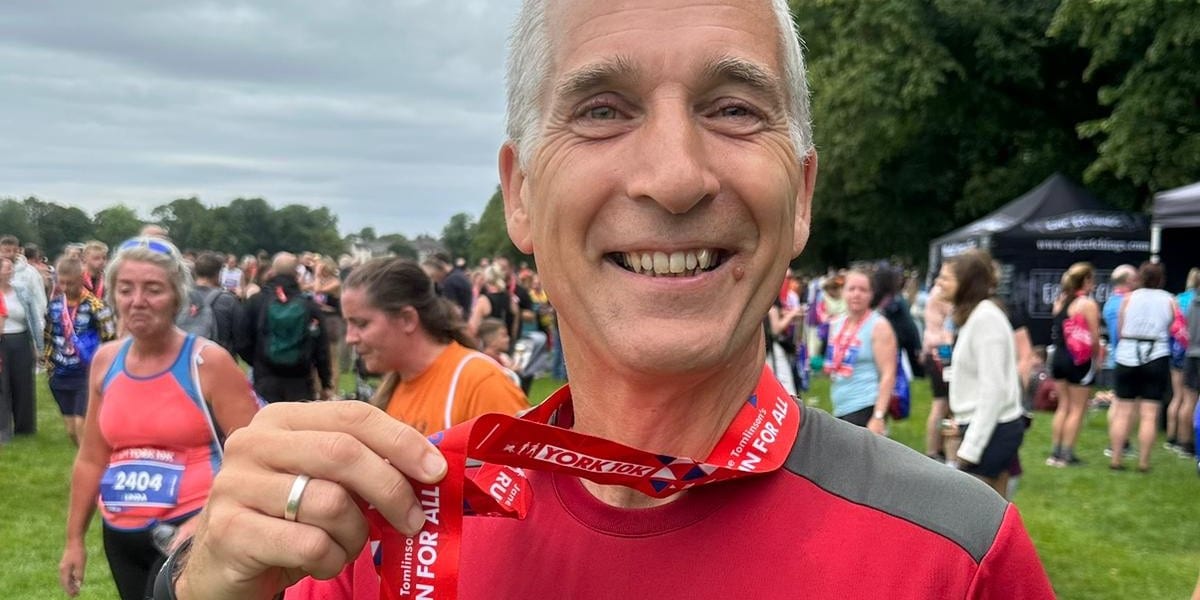
In part one I told you about the canal. In part two I told you about week seven, Steve Cram, and the fifteen weeks it took to finish a nine-week programme. This part is the practical one, what I've learned in the six years since, and what I'd tell someone who's just lacing up for the first time.
Where I am now
I run three times a week: an easy run, an interval session, and a longer run. At 64, I run and walk a comfortable 10K. I sleep better on days I've run. My resting heart rate has dropped noticeably over the years. None of this is remarkable in isolation. But taken together, for someone who was waist-deep in a canal avoiding PE in the 1970s, it feels like a reasonable outcome.
The three-run structure matters more than the individual sessions. Running twice a week, I found, was enough to maintain fitness but not quite enough to build it or make it feel automatic. Three times tips it into habit. It becomes part of the week rather than an imposition on it.
What I'd tell someone starting out
Slow down more than you think you need to. The single biggest mistake new runners make. If you can't hold a conversation while running, you're going too fast. It feels wrong, like you're not working hard enough, but easy-paced running is how you build the aerobic base that makes everything else possible. The heart-pounding approach I started with is not effectiveness. It's poor pace management.
The programme taking longer than advertised is completely normal. Couch to 5K is a nine-week programme that takes many people twelve, fifteen, or twenty weeks. Repeating a week is not failure. It's the programme working correctly at the pace your body needs. The goal is to reach the end. Not to reach it on schedule.
Find your Parkrun. The free, weekly, timed 5K that happens in parks across the country every Saturday morning is one of the better things I've come across. All abilities, all ages, walkers as welcome as runners. It makes running social and gives the week a structure it wouldn't otherwise have. Find your local one at parkrun.org.uk. It costs nothing and you just need to register once.
The shoes matter, but not on day one. Don't spend significant money on running shoes until you know you're going to stick with it. Once you know you are, go to a proper running shop, not a sports superstore, and get a gait analysis. It takes ten minutes, costs nothing, and means you end up with shoes that are right for how you actually run rather than how the packaging suggests you should. The expensive shoes I eventually bought were worth every penny. I didn't need them in week one.
It gets easier. Then it gets enjoyable. Not immediately, and not for everyone. But there is a point, different for each person, where running stops being an act of willpower and becomes something you want to do. I genuinely did not believe this was possible for me. I was wrong, which I say as someone who had strong evidence to the contrary for the better part of forty years.
Getting started, the short version
- Download the NHS Couch to 5K app, free, well-structured, and Steve Cram is genuinely encouraging
- Run slower than feels right, if you can't hold a conversation, slow down further
- Repeat weeks as many times as needed, this is not failure, this is the programme
- Aim for three sessions a week once you're through the programme
- Register for your local Parkrun at parkrun.org.uk, free, every Saturday
- Hold off on expensive shoes until you're committed; then get a gait analysis
One thing nobody tells you
There are no rules for recreational running.
If you feel like walking, walk. If you want to stop and admire the view, check your emails or make a phone call, just do it. Wear what you like, Nike or Lidl, nobody cares. Listen to music. Listen to the birds. Listen to your breathing. Take a drinks bottle or don't take one. Eat before you go, eat when you get back, eat along the way. It doesn't matter.
Just go.
The running world has an unfortunate tendency to make the whole thing sound complicated and rule-bound and gear-dependent. It isn't. It's putting one foot in front of the other, outside, at whatever pace suits you, for however long you feel like. Everything else is optional.
Further reading ★
If you want to go a bit deeper into the science and practice of running, why slow running works, how to structure training, and the broader case for running as a long-term health investment, these are the books I'd point you toward. I'll add to this list as I read more.
placeholder
Coming soon
David will be adding reading recommendations here, books he's personally read and would genuinely suggest.
★ Book links marked with a star are affiliate links. If you buy through them, I receive a small commission at no extra cost to you. I only recommend books I've read myself.
One last thought
Six years ago I was standing on a pavement, hands on knees, four minutes into what I'd hoped would be a run. The canal was further away, but the instinct to avoid the whole thing was familiar.
What changed wasn't motivation. Motivation is unreliable and I wouldn't recommend depending on it. What changed was finding a structure that asked less of me than I thought running required, and sticking with it long enough for it to become normal. That's really all it was.
The school cross-country team would still not select me. But I like to think I'd be a lot less inclined to take a dip in the canal these days.