I tried sleep tracking for a week. Here's why I stopped.
The watch was probably right. I just didn't find it useful. A short piece on what sleep tracking told me, why it conflicted with how I felt, and why I decided to trust myself instead.
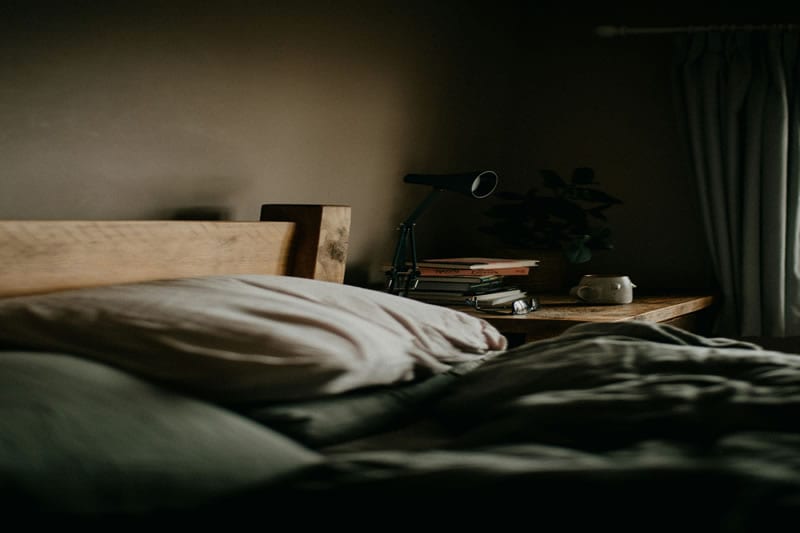
Sleep tracking is one of those ideas that sounds obviously useful right up until you try it.
The premise is appealing: wear a device at night, let it measure your sleep cycles, deep sleep, REM, restlessness, heart rate, and wake up with data that tells you how well you actually slept. In a world where we track steps and calories and active minutes, it seems like a natural extension. More information. Better decisions.
I borrowed an Apple Watch for a week and gave it a go.
What the data said
The watch worked, as far as I could tell. It tracked consistently, produced plausible-looking sleep stage breakdowns, and delivered its verdict each morning with the quiet confidence of something that had been paying attention all night while I hadn't.
The problem was the gap between what it said and how I felt.
I would wake up after what seemed like a perfectly good night's sleep, rested, clear-headed, ready to get on with things, check the stats, and find that according to the watch I hadn't slept particularly well at all. Restless. Insufficient deep sleep. A score that didn't match my experience of the night.
And then the opposite. I'd have what felt like a difficult night, half-awake, aware of time passing, certain I'd barely slept, and the watch would report hours of solid, uninterrupted sleep. Good deep sleep percentages. A score that suggested I should feel considerably better than I did.
"The watch was probably right. That was almost the problem."
DavidI don't think the watch was malfunctioning. Sleep trackers have genuine limitations. Consumer devices measure movement and heart rate rather than brain activity directly, so they're making educated inferences rather than definitive measurements, but broadly, I'm prepared to believe the data was reasonably accurate. We're often poor judges of our own sleep. Studies consistently show that people overestimate how long it takes them to fall asleep and underestimate how much they sleep overall. The watch was probably closer to the truth than my subjective impression in at least some of those cases.
The question it raised
But here's where I landed: knowing more didn't help me do more.
What was I supposed to do with the information that I'd had insufficient deep sleep on a Tuesday night? I couldn't go back and have it again. I couldn't, on a practical level, change much about Wednesday as a result. The data was interesting in the way that a lot of data is interesting, right up until the point where you ask what you're meant to do with it.
For someone with a genuine sleep disorder, or a specific concern they're investigating with medical support, tracking makes obvious sense. Data has a purpose when there's an intervention attached to it. But for a generally healthy person who sleeps reasonably well and has no particular sleep complaint, I'm not convinced that a nightly score adds much beyond a new category of thing to feel mildly anxious about.
Orthosomnia, anxiety about achieving perfect sleep, sometimes triggered or worsened by sleep tracking data, is a recognised phenomenon, documented in sleep research since consumer trackers became widespread. It's not universal, and many people track sleep without any ill effect. But it's worth knowing the risk exists before you start.
What I do instead
I go to bed at roughly the same time each night. I wake up at roughly the same time each morning. I aim for around eight hours and usually get close to it. I don't track any of this, because I don't need to. I know whether I've slept well by the fairly reliable method of noticing how I feel when I wake up.
If I feel rested, I got enough sleep. If I feel tired, I didn't. This is not a sophisticated system. It is, however, one that has served human beings adequately for the entirety of recorded history prior to the invention of the smartwatch.
The things that actually affect my sleep quality aren't measurable by a wrist device anyway: whether I've exercised that day, whether I've eaten too late, whether I've had more wine than usual, whether something is on my mind. I know what those things are. I don't need a graph to tell me.
A caveat, honestly given
I tried sleep tracking for a week, with a borrowed device, some years ago. That is not a rigorous evaluation. People who track sleep consistently over months report finding genuine patterns and making useful changes. The Oura ring and Whoop band in particular have devoted followings among people who find the longitudinal data genuinely instructive.
If you're curious, try it. A week with a borrowed device costs nothing and you'll find out quickly whether the data feels useful or just adds noise. My experience was the latter. Yours may well be different.
But if you wake up feeling well rested and the watch tells you otherwise, I'd trust yourself.