From pyramid to plate, my actual weekly Mediterranean meal plan
The pyramid tells you what to eat and how often. It doesn't tell you what to have on a Tuesday. Here's how I translated it into a real weekly meal structure, with actual dishes, honest adjustments, and the things worth knowing before you start.
In part one I went through the Mediterranean diet pyramid tier by tier, what it actually says rather than the vague "eat more fish" summary most people take away from it. If you haven't read that first, it's worth five minutes before this one.
This part is the practical translation. The pyramid gives you a frequency structure; what it conspicuously doesn't give you is a week's worth of meals. That gap, between understanding the diet and actually eating it, is where most people get stuck. I spent some time working it out, and this is what I arrived at.
The weekly meal structure
Seven evening meals a week. Here's how I distribute them across the pyramid's categories:
Three vegetarian, two fish, one white meat, one red meat. That's the weekly shape. Everything else, what's at each meal, what's in the fridge, what you eat for breakfast and lunch, flows around this structure.
How this maps against the pyramid
The one area that's slightly under the pyramid's recommendation is white meat. I do one meal rather than two. In practice the third vegetarian meal often contains eggs, which compensates in protein terms. The pyramid's recommendations are a range rather than a rigid prescription; being slightly under on one category while being solid on everything else is fine.
The daily habits that hold it together
The weekly meal structure is only part of the picture. The daily habits, the things that happen regardless of what's for dinner, are what make the diet actually Mediterranean rather than just "seven reasonably healthy evening meals."
Every day: a handful of mixed nuts (I keep a jar on the counter. Out of sight is out of mind). Full-fat natural yogurt, usually at breakfast with fruit and a spoonful of seeds. A piece or two of fruit. Cheese in modest amounts. Garlic and onions in almost everything cooked. Olive oil as the default fat. Herbs and spices rather than reaching for the salt.
Oats for breakfast most mornings, with fruit, seeds, and sometimes a spoon of yogurt stirred through. Simple, filling, and covers several pyramid categories in one bowl.
The bread question
I bake my own wholemeal bread. This isn't an essential part of the Mediterranean diet. Good quality wholegrain bread from a bakery or supermarket is perfectly fine, but it's worth mentioning because the ingredients in commercially baked bread are often more varied than you'd expect, and making your own means you know exactly what's in it. It's also considerably cheaper per loaf, once you've got into the routine of it.
The pyramid specifies wholegrain wherever possible. For bread specifically, this means looking for loaves where wholemeal flour is the first ingredient, not just "wheat flour with added fibre." The labelling on bread can be misleading.
A note on processed meat
The pyramid is more restrictive on processed meat than most people realise, under one serving per week, treated separately from red meat. In practice this means bacon, sausages, salami, ham and similar products are genuinely occasional rather than regular. A cooked breakfast once a week puts you at the limit; a daily rasher or regular charcuterie board puts you over it.
This is probably the biggest practical departure from how most British households eat, and worth being honest about. The diet doesn't forbid any of these things. It just asks you to count them separately and keep them infrequent.
Further reading ★
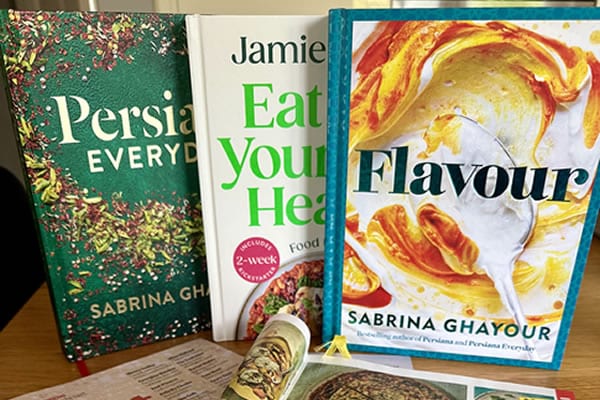
These are the cookbooks I'd recommend for anyone who wants to cook this way properly. Mediterranean cooking has a deep literature and some genuinely excellent writers. These are the ones I'd start with.
placeholder
Coming soon
David will be adding his personal cookbook recommendations here, books he cooks from regularly and would genuinely suggest.
★ Book links marked with a star are affiliate links. If you buy through them, I receive a small commission at no extra cost to you. I only recommend books I cook from myself.